Staying in the Game: SoftWave and the Active Adult
Clearwater is full of people who love to move. Early tee times, pickleball ladders, sunrise runs along the causeway. For many active adults, the hardest part of getting older is not the number on the calendar. It is the nagging elbow, the tight heel, or the knee that complains after a long match. This post looks at common activity related aches and where SoftWave therapy may fit into the conversation.
Common Concerns We Hear About
Every sport puts its own demands on the body. A few patterns come up often:
- Golfers often mention elbow, wrist, shoulder, or low back discomfort, especially after a busy week on the course.
- Pickleball players frequently talk about elbow strain, shoulder irritation, and calf or Achilles tightness from quick lateral moves.
- Runners commonly bring up heel and arch pain, shin discomfort, and irritation around the knee or hip.
Many of these issues involve tendons, ligaments, and other soft tissue that are under repeated stress. Rest, strength work, good equipment, and technique changes are often part of the picture.
What SoftWave Is
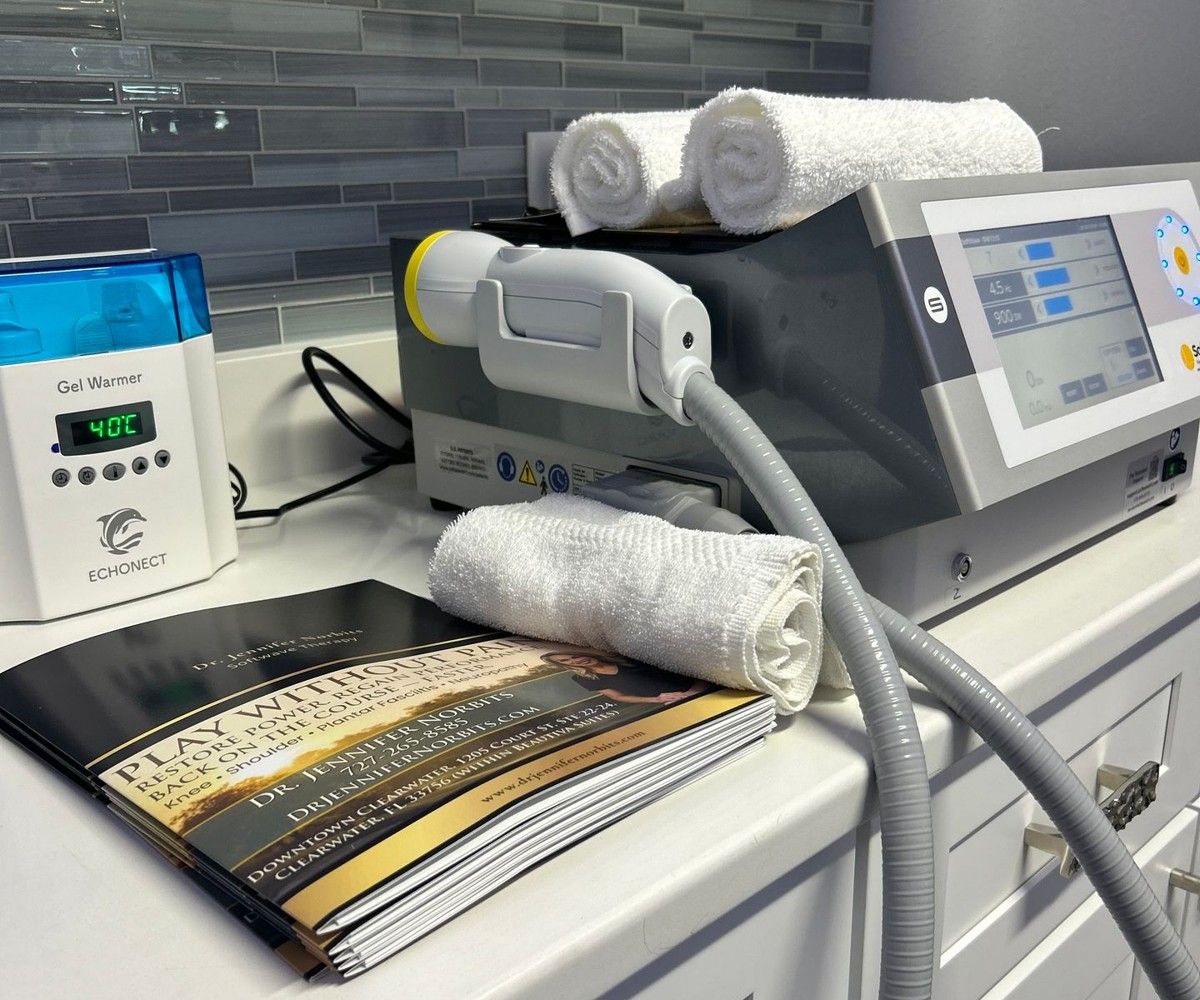
SoftWave is a form of acoustic wave therapy. It uses an electrohydraulic source and a parabolic reflector to deliver sound waves over a broad area of tissue. SoftWave has been cleared by the FDA through the 510(k) process for specific indications. Research into how acoustic wave therapy affects soft tissue is ongoing, and individual responses differ.
Dr. Jennifer Norbits uses SoftWave as one option for people who want to explore a noninvasive approach alongside the guidance they receive from their physician, physical therapist, or coach.
A Quick Note on Shockwave Types
Not all shockwave devices work the same way. Radial devices spread energy from the skin surface outward. Focused devices concentrate energy at a narrow point. SoftWave produces a broader field from its reflector design. Each has its own uses and research, and none is the right choice for everyone. If you have tried a different shockwave device before, that history is helpful to share at your visit.
What SoftWave Is Not
It is important to be clear about limits:
- SoftWave is not a substitute for a medical diagnosis.
- It does not replace physical therapy, strength training, or rest when those are needed.
- It is not a promise that you will return to a specific level of play by a specific date.
The goal is an honest conversation about whether SoftWave seems like a reasonable fit, not a sales pitch.
Habits That Support Active Bodies
Whatever you decide about SoftWave, a few basics support most active adults:
- Warm up before you play, even for a casual round.
- Build strength in the hips, core, and shoulders.
- Increase mileage or match time gradually.
- Pay attention to equipment, including shoes, grips, and paddle weight.
- Take recurring pain seriously and talk with your physician.
Start With a Conversation
If a lingering ache is keeping you off the course, the court, or the trail, a mapping session with Dr. Jennifer Norbits is a simple way to learn more. You will talk through your activity, your history, and your goals with Dr. Jennifer Norbits.
Self-pay. Results vary.
Talk with your physician before starting any new treatment.